Best AI Desktop PC in 2026
ASUS ROG G700 (RTX 5090) leads this page with an AIPC Score of 51.2, giving a local model about 32GB of usable AI memory at $2,399 for the 32GB / 1TB configuration. The cheapest tracked option here is Framework Desktop (Ryzen AI Max 385) at $1,269. 20 systems on this page, 9 with a verified price.
Updated
| # | System | Type | AI Memory | GPU/NPU | AI Score | Price | Verified | View |
|---|---|---|---|---|---|---|---|---|
| 1 |  ASUS ROG G700 (RTX 5090) | Desktop | 32GB | GeForce RTX 5090 | 51.2 | $2,399 | View Deal on Amazon → | |
| 2 | 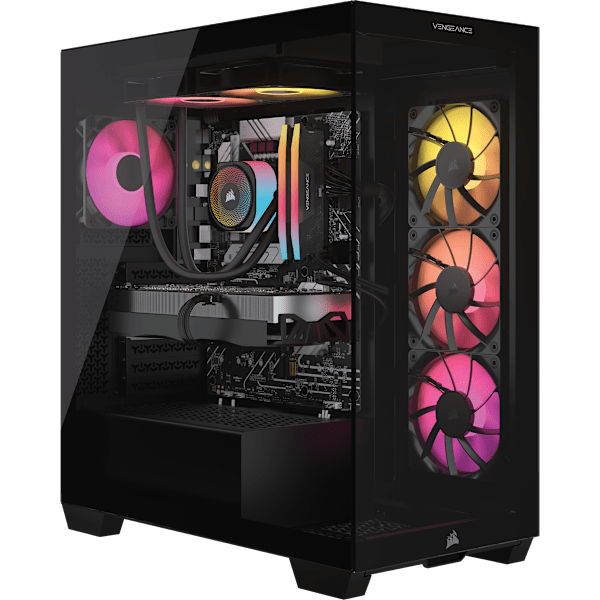 Corsair Vengeance i7500 (RTX 5090) | Desktop | 32GB | GeForce RTX 5090 | 50.4 | No verified price | — | View details → |
| 3 | 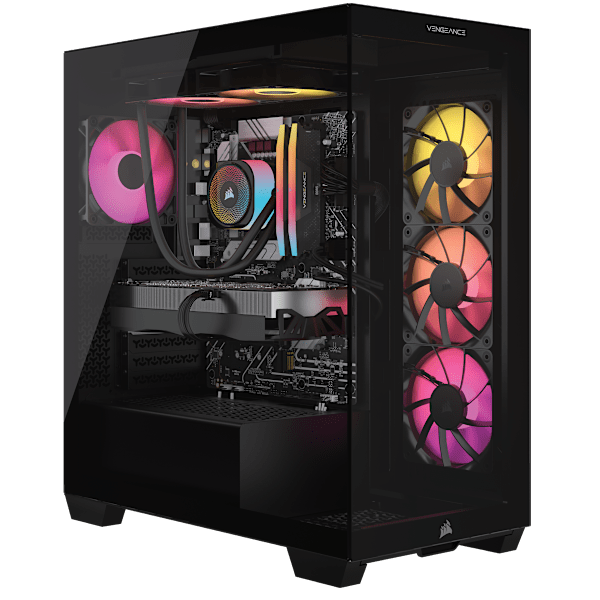 Corsair Vengeance a7500 (RTX 5090) | Desktop | 32GB | GeForce RTX 5090 | 50.4 | No verified price | — | View details → |
| 4 | 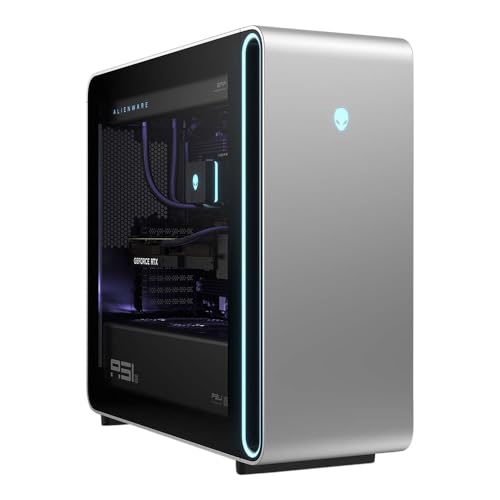 Alienware Area-51 (RTX 5090) | Desktop | 32GB | GeForce RTX 5090 | 50.4 | No verified price | — | View details → |
| 5 |  HP OMEN 45L (RTX 5090) | Desktop | 32GB | GeForce RTX 5090 | 50.4 | No verified price | — | View details → |
| 6 |  Lenovo Legion Tower 7i (RTX 5090) | Desktop | 32GB | GeForce RTX 5090 | 50.4 | No verified price | — | View details → |
| 7 |  MSI MEG Vision X AI (RTX 5090) | Desktop | 32GB | GeForce RTX 5090 | 50.4 | No verified price | — | View details → |
| 8 | 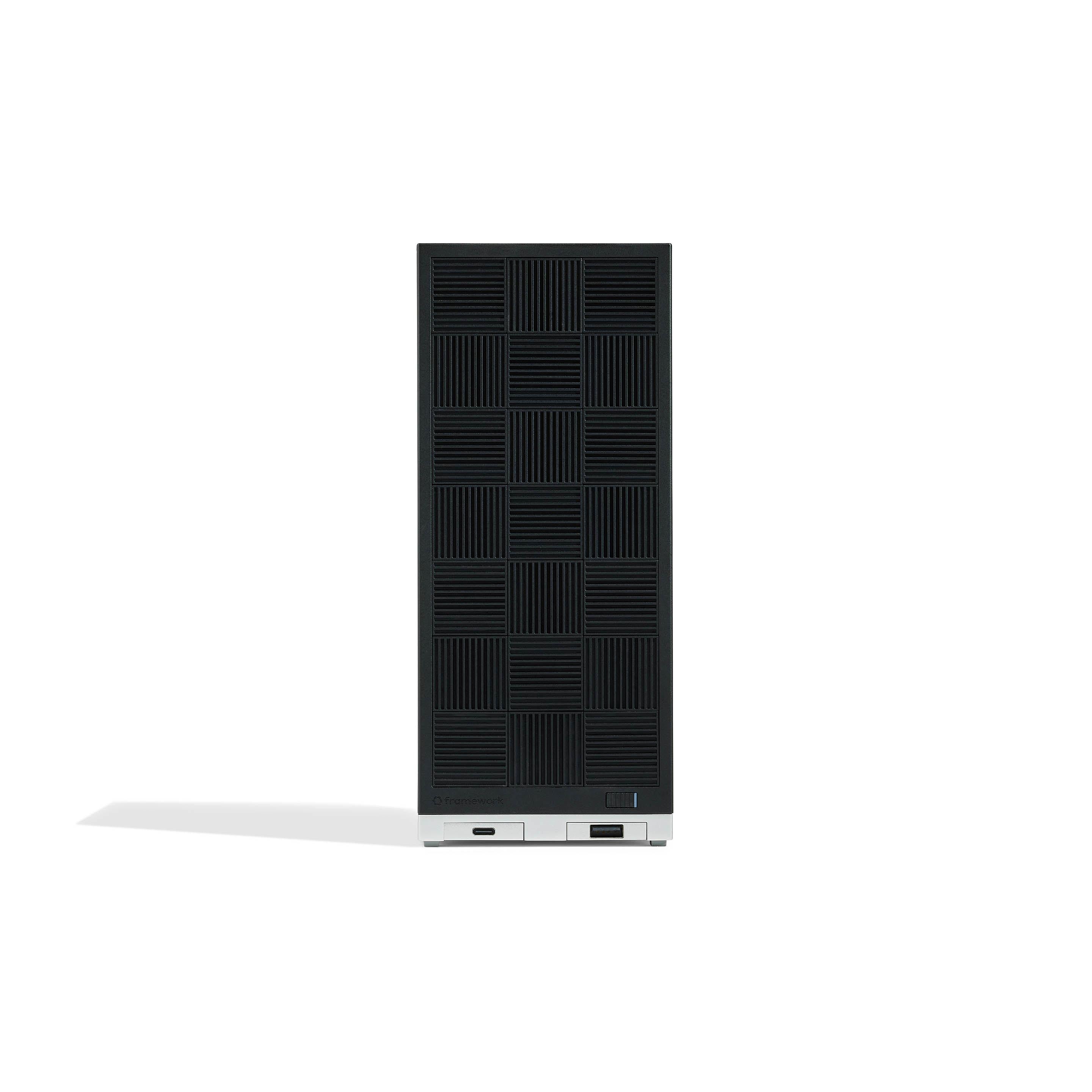 Framework Desktop (Ryzen AI Max+ PRO 495) | Desktop | 144GB | Radeon 8060S (40 CU) | 46.1 | Price awaiting re-verification | Check Price at Framework → | |
| 9 |  Apple Mac Studio (M5 Ultra) | Desktop | 72GB | Apple M5 Ultra 80-core GPU | 43.9 | Price awaiting re-verification | Check Price at Apple → | |
| 10 | Framework Desktop | Desktop | 48GB | Radeon 8060S (40 CU) | 34.9 | Price awaiting re-verification | Check Price at Framework → | |
| 11 |  Alienware Aurora (RTX 5080) | Desktop | 16GB | GeForce RTX 5080 | 31.8 | $3,602.57 | View Deal on Amazon → | |
| 12 |  HP OMEN 35L (RTX 5080) | Desktop | 16GB | GeForce RTX 5080 | 31.5 | No verified price | — | View details → |
| 13 |  Lenovo Legion Tower 5 (RTX 5070 Ti) | Desktop | 16GB | GeForce RTX 5070 Ti | 30 | $2,880.44 | View Deal on Amazon → | |
| 14 |  Skytech King 95 (RTX 5070 Ti) | Desktop | 16GB | GeForce RTX 5070 Ti | 29.6 | No verified price | — | View details → |
| 15 |  MSI Aegis R2 AI (RTX 5070 Ti) | Desktop | 16GB | GeForce RTX 5070 Ti | 29.6 | No verified price | — | View details → |
| 16 |  Lenovo Legion Tower 5i (RTX 5070 Ti) | Desktop | 16GB | GeForce RTX 5070 Ti | 29.6 | No verified price | — | View details → |
| 17 |  KOTIN Gaming PC (RTX 5070 Ti) | Desktop | 16GB | GeForce RTX 5070 Ti | 29.6 | No verified price | — | View details → |
| 18 |  Apple Mac Studio (M5 Max) | Desktop | 27GB | Apple M5 Max 40-core GPU | 28.3 | $2,299 | View Deal on Amazon → | |
| 19 |  Acer Nitro 85 (RX 9070 XT) | Desktop | 16GB | Radeon RX 9070 XT | 26.4 | Price awaiting re-verification | Check Price at Acer → | |
| 20 | Framework Desktop (Ryzen AI Max 385) | Desktop | 24GB | Radeon 8050S | 26.3 | Price awaiting re-verification | Check Price at Framework → |
Product prices and availability are accurate as of the date/time indicated and are subject to change. Any price and availability information displayed on Amazon at the time of purchase will apply to the purchase of this product.
Speed or size, pick first
A desktop with a discrete card is the fastest way to run a model that fits in VRAM, and completely unable to run one that does not. A unified-memory desktop is the opposite. Decide which problem you have before you look at prices.
Usable AI memory decides what a machine can load at all, and memory bandwidth decides how fast it answers once loaded. Those two numbers matter more than the processor name on the box. A machine with a large unified pool and modest bandwidth will run a very large model slowly; a machine with a fast narrow pool will run a small model quickly and refuse a large one outright.
Why image and video work differs
Diffusion models are compute-bound in a way language models are not. For Stable Diffusion, FLUX or video generation, raw GPU throughput decides how long you wait, and a discrete card wins decisively. For language models, memory decides what runs at all.
Expandability is real value
A tower takes more memory, more storage and a bigger card later. That is worth paying for if your requirements are likely to grow, and it is the main structural advantage a desktop still holds over a mini PC.